How geometry, materials, and tolerances directly affect cost and performance when you design for injection molding.
Injection molding is one of the most efficient ways to produce high-volume plastic parts, but only when the part is designed with the process in mind. Poor design decisions can quietly multiply tooling costs, increase cycle time, raise scrap rates, and delay production. Good design does the opposite. It shortens lead times, stabilizes quality, and keeps per part pricing predictable.
Key Principles of Design for Injection Molding
This guide walks through the most important design considerations for injection molding and explains how each one impacts cost, manufacturability, and long term performance.
Start with wall thickness
Wall thickness is one of the first things experienced molders look at. Consistent wall thickness allows molten plastic to flow evenly, cool uniformly, and solidify without internal stress. When walls vary too much, problems show up fast, sink marks, warping, and longer cycle times.
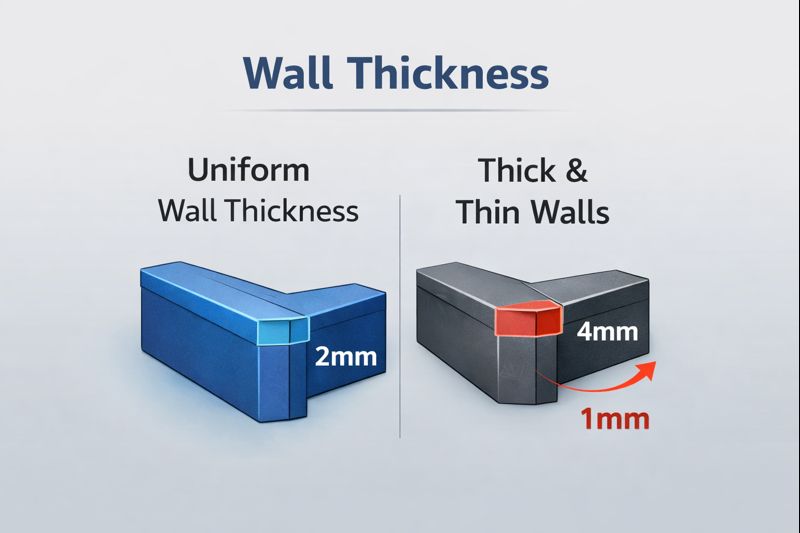
Thin walls cool quickly but may not fill completely if the material or gate design is wrong. Thick walls hold heat longer, increasing cycle time and often requiring higher clamp forces. The goal is balance, not extremes.
From a cost perspective, inconsistent wall thickness increases:
- Tool complexity
- Cooling time
- Risk of cosmetic defects
- Scrap and rework
Designing with uniform walls keeps tooling simpler and production more repeatable.
Draft angles are not optional
Draft is the slight taper added to vertical surfaces so parts can eject cleanly from the mold. Designers sometimes try to minimize or eliminate draft to preserve exact geometry, but this almost always creates downstream problems.
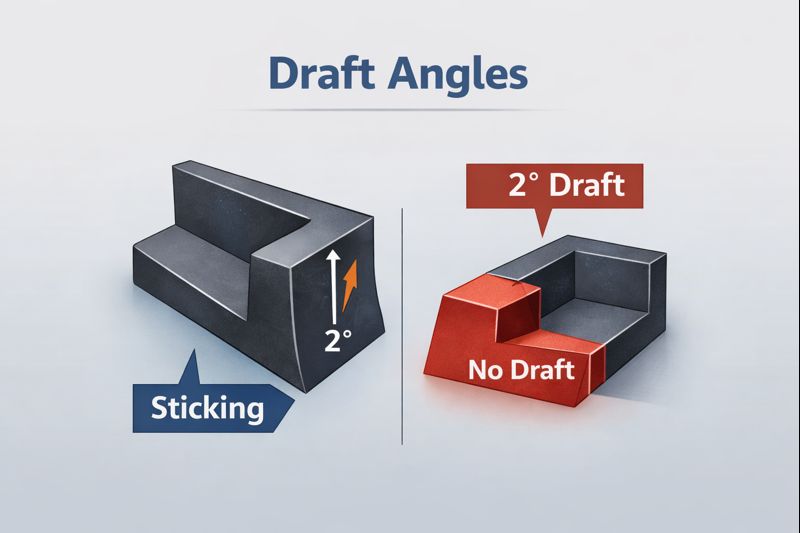
Without adequate draft, parts stick in the mold. That leads to higher ejection force, cosmetic damage, and mold wear. Over time, this increases maintenance costs and production downtime.
Adding proper draft:
- Improves surface finish
- Reduces tool wear
- Allows faster, smoother ejection
- Extends mold life
A small design adjustment early on saves real money over thousands or millions of cycles.
Tolerances drive tooling cost
Tight tolerances are expensive, even when they seem minor on paper. Every tighter tolerance increases machining time, inspection requirements, and process control demands.
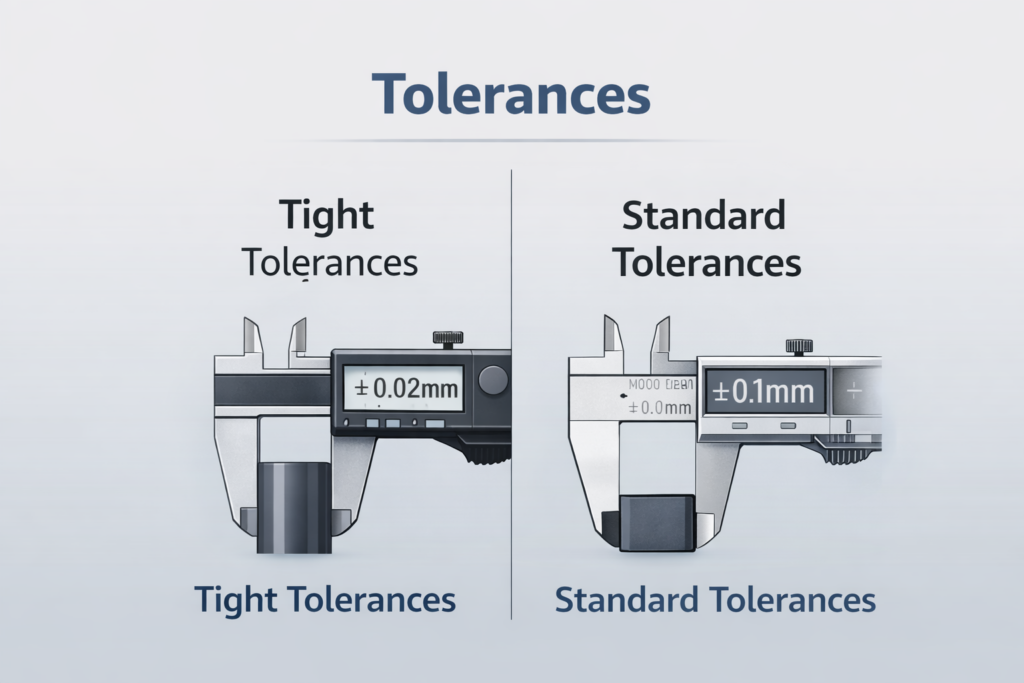
Not every feature needs to be held to the same standard. A smart approach is functional tolerancing. Critical dimensions get tight tolerances. Non critical features are relaxed.
When tolerances are over specified:
- Tooling costs rise
- Cycle time increases
- Scrap risk goes up
- Yield drops over long runs
Designing with realistic tolerances aligned to function keeps parts affordable without sacrificing performance.
Plastic Injection Molding Design: Factors To Consider
Material selection affects everything
Material choice impacts mold design, cycle time, part durability, and long term consistency. ABS, polycarbonate, nylon, and polypropylene all behave differently in the mold.
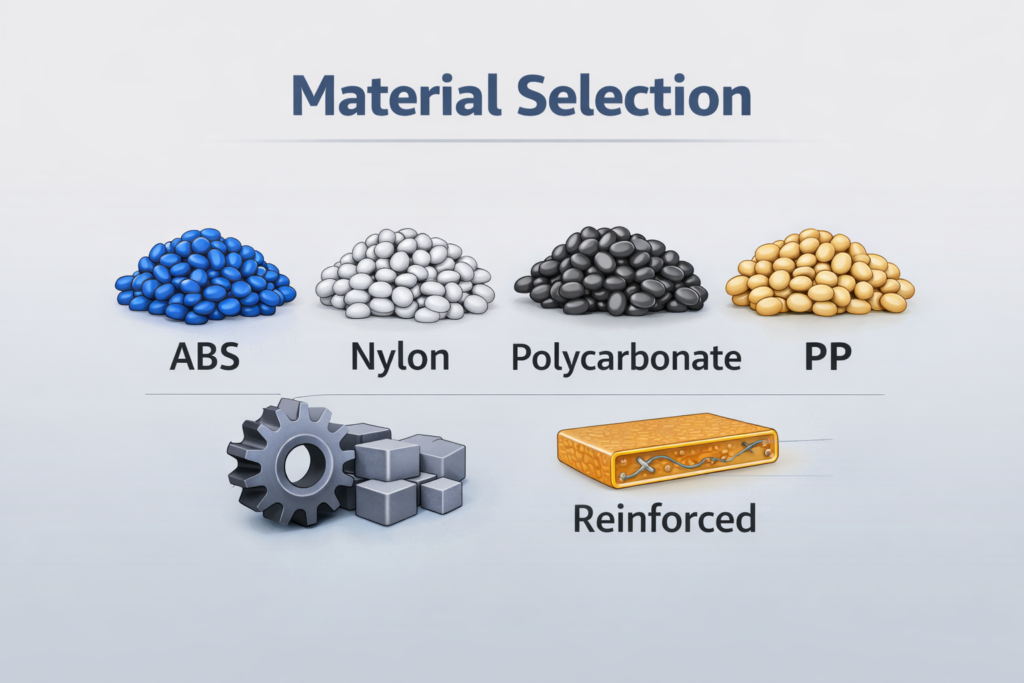
Some materials flow easily but shrink more. Others are strong and heat resistant but require higher processing temperatures. Reinforced materials such as glass filled resins improve strength but accelerate tool wear.
Choosing the right material early allows the mold to be optimized for:
- Flow behavior
- Cooling strategy
- Gate placement
- Expected shrink rates
Material changes late in the process often mean expensive tool modifications. Aligning design and material from the start avoids that trap.
Geometry influences cycle time
Complex geometry is not inherently bad, but it needs to be intentional. Thick ribs, deep bosses, sharp corners, and isolated mass all affect how heat moves through the part.
Sharp internal corners concentrate stress and slow material flow. Generous radii improve strength and flow while reducing stress cracking. Properly designed ribs add stiffness without increasing wall thickness.
Every second added to cycle time compounds over production runs. Good geometry reduces cooling time and keeps output predictable.
Understanding Custom Plastic Injection Molding: The Ultimate Guide
Think like a mold, not just a part
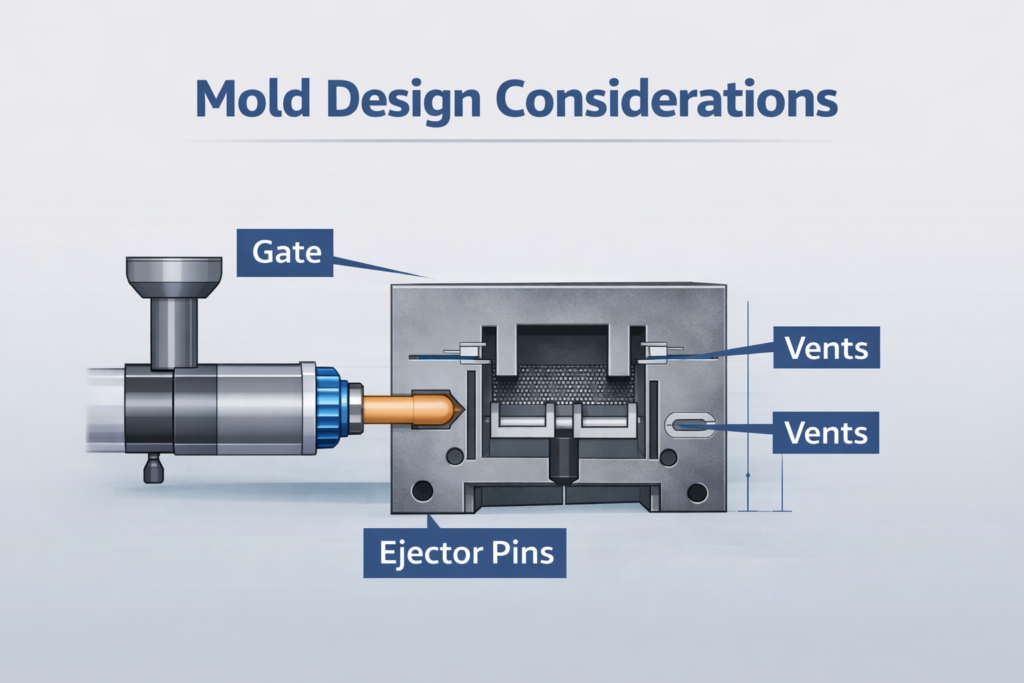
One of the biggest mistakes in injection molding design is focusing only on the finished part. A better mindset is to design the part as a system that includes the mold.
Questions worth asking early:
- Where will the part be gated
- How will it eject
- Where does air escape
- How does the part cool
Designs that answer these questions early lead to simpler molds, fewer revisions, and faster production ramps.
A Brief Guide to How Plastic Injection Molding Works
Design decisions are business decisions
Injection molding design is not just an engineering exercise. It directly affects:
- Tooling investment
- Lead times
- Unit cost
- Long term quality stability
Well designed parts move through production quietly. Poorly designed parts create constant friction.
Working with a molder early in the design phase helps identify risks before they become expensive problems. Small geometry changes at the design stage are far cheaper than mold revisions later.
Final thought
Design for injection molding is about alignment. When geometry, material choice, and tolerances work together, production becomes efficient and repeatable. When they fight each other, costs rise fast.
Good design does not mean over-engineering. It means designing with intention, understanding how the mold works, and making decisions that support manufacturing from day one.
This is how injection molding stays fast, scalable, and cost-effective.
Frequently Asked Questions
Questions and Answers